
Musty odors and damp air indoors
Air from the crawl space can move into the living space through gaps and chases. Encapsulation helps cut off that moisture and odor source and gives you a way to control humidity under the home.
Serving Charlotte, North Carolina & surrounding areas
Crawl Space Service · Charlotte, NC
Seal out ground moisture, reduce musty odors, and protect your home's structure with a clean, controlled crawl space built for the Carolinas' humidity.
Control the Conditions Below
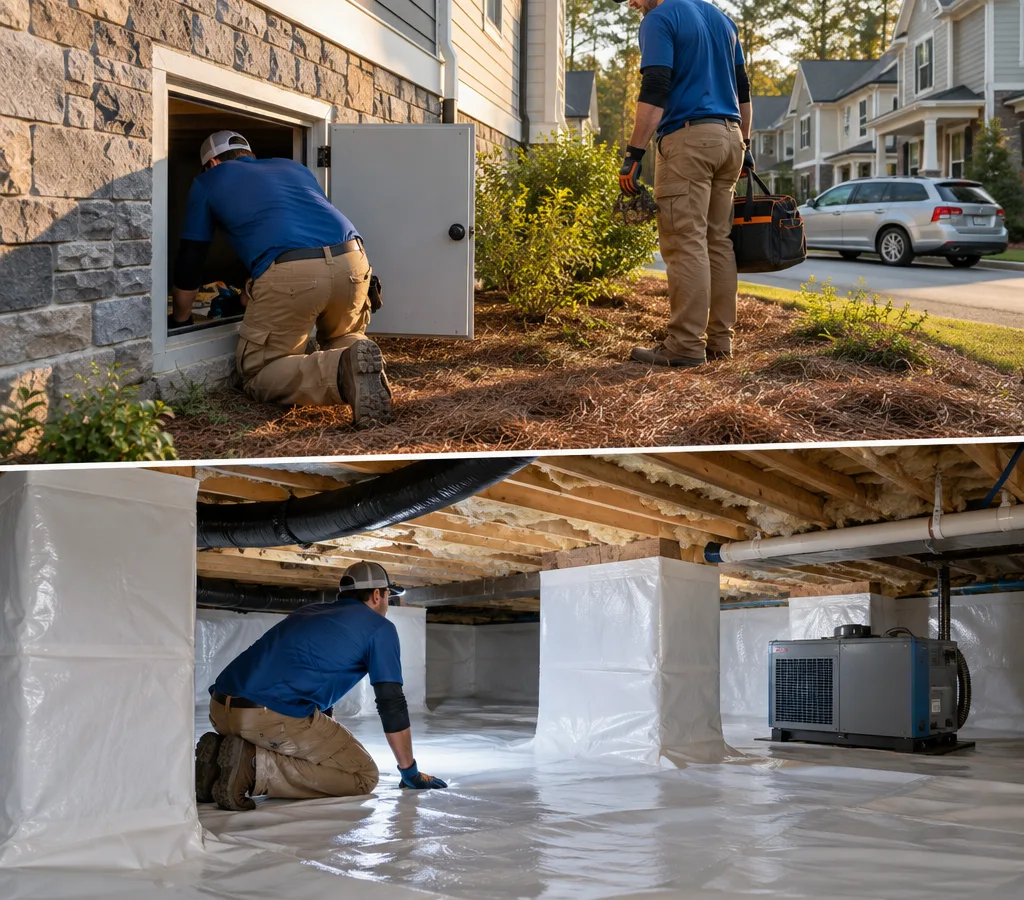
Crawl space encapsulation in Charlotte is about taking control of the conditions under your home. When damp air and ground moisture move freely through an open crawl space, you can end up with musty smells, condensation on framing, damp insulation, and higher humidity upstairs. Encapsulation seals the crawl space so you can manage moisture, air movement, and drainage instead of reacting to recurring problems.
Foundation Repairs Charlotte NC handles crawlspace encapsulation Charlotte homeowners rely on when they want a clear scope, durable materials, and a system that is installed to work as a whole. You will get a crawl space inspection focused on where water is entering—ground moisture, vents, plumbing leaks, or exterior drainage—how the space is currently performing, and what it will take to keep it dry long-term. As an experienced foundation team in Charlotte, we are used to working in tight access areas, coordinating repairs in the right order, and documenting what is happening under the home before any work starts.
In Charlotte's hot, humid months, outdoor air brought in through crawl space vents can carry a lot of moisture. When that air hits cooler surfaces under the home, it can condense. A properly sealed and conditioned crawl space is designed to stop that cycle rather than masking it with temporary fixes.
A Continuous Moisture Barrier
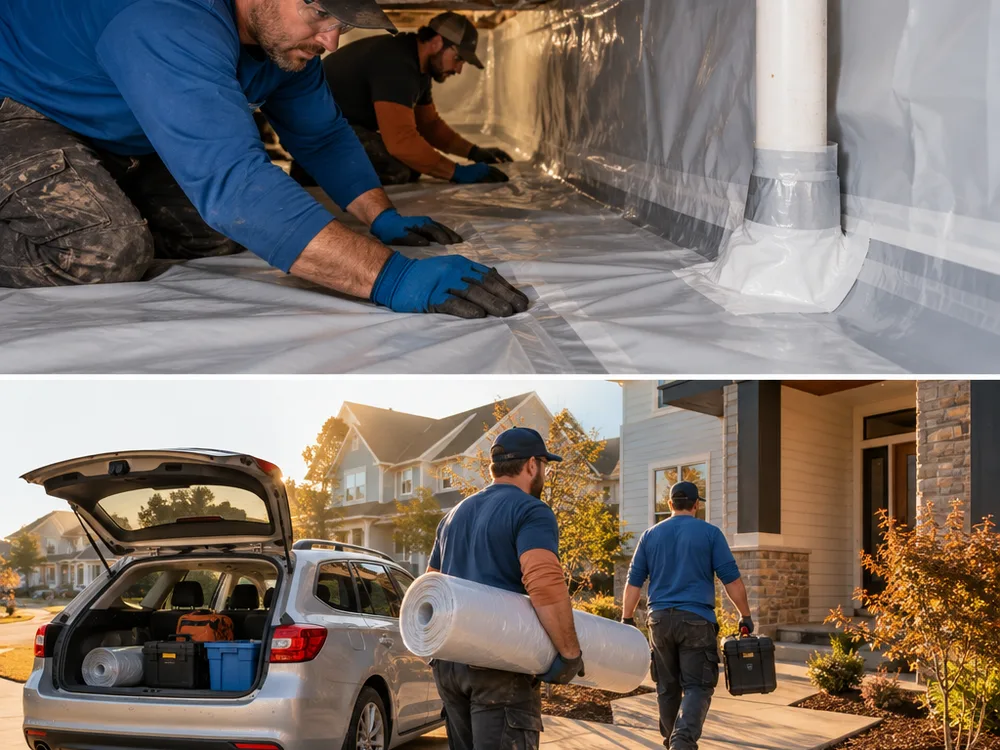
A complete crawl space encapsulation is more than laying plastic on the ground. The goal is to create a continuous barrier, seal the edges, and control humidity.
Typical components include:
If the crawl space has standing water, active seepage, or drainage issues, those conditions are addressed first so the encapsulation is not asked to fight bulk water. The right solution depends on what we see during the inspection.
Signs and Conditions
Air from the crawl space can move into the living space through gaps and chases. Encapsulation helps cut off that moisture and odor source and gives you a way to control humidity under the home.
Fiberglass insulation in a vented, damp crawl space can absorb moisture and fall out of place. Encapsulation reduces the moisture load so insulation and framing stay in better condition.
When humid air meets cooler surfaces, condensation forms. A sealed crawl space plus dehumidification can keep surfaces above the dew point more consistently.
Mold needs moisture. Reducing vapor from the soil and managing humidity creates conditions that are less favorable for growth on joists, subflooring, and piers.
A damp crawl space can make floors feel cooler in winter and sticky in summer. Encapsulation helps stabilize the air under the home, which can reduce the load on HVAC systems depending on the home.
Built for Charlotte Conditions
Encapsulation details should match how homes are built and how water behaves around the foundation.
In neighborhoods with older housing stock like Dilworth and Plaza Midwood, crawl spaces may have multiple additions, older venting patterns, and mixed materials that create more air leakage paths. We spend extra time finding bypasses at chases, fireplaces, and patched access openings so the system actually stays sealed.
In areas with more rolling topography, such as parts of SouthPark and Ballantyne, surface water can move quickly toward a low side of the house during heavy rain. Before we seal a crawl space, we look for signs of bulk water entry and recommend the right drainage approach so the liner is not constantly exposed to standing water.
In University City, newer construction can still have moisture issues if grading, downspouts, or HVAC condensate routing sends water toward the foundation. Encapsulation works best when exterior water is directed away and the crawl space is treated as a controlled zone.
Across Charlotte, humid summers are the constant. If your crawl space is vented, warm outdoor air can bring moisture in. Encapsulation is the practical way to stop feeding that moisture into the space and then manage the remaining humidity with a dedicated plan.
Inspection to Final Check
We document current conditions: standing water or staining, humidity, insulation condition, venting, and air leakage points. We also check for issues that should be corrected before sealing, like plumbing leaks or disconnected ducts.
We remove debris as needed, address damaged insulation if it is part of the scope, and get the crawl space ready so the liner can lay flat and seal properly at seams and edges.
We seal penetrations, gaps, and—when appropriate—crawl space vents to reduce humid air exchange. Details at the rim area and access door matter for performance.
We install a reinforced vapor barrier across the ground, seal seams, and run the liner up walls and around piers to create continuity. Attachments are mechanically fastened where needed, not left loose.
We install moisture control equipment when included in the plan, confirm drainage paths, and review what was done so you know how the crawl space is intended to perform.
Plan the Investment
Crawl space encapsulation in Charlotte typically ranges from about $4,000 to $12,000+, with smaller, straightforward crawl spaces often landing near the lower end and larger or more complex projects—taller spaces, heavy prep, drainage needs, or a dehumidifier—trending higher.
Final price depends on square footage, liner thickness and reinforcement, how much wall wrapping and sealing is required, access and clearance, existing insulation removal, and whether bulk-water control is needed before the space can be sealed. The exact cost is confirmed after an on-site crawl space inspection and a written scope.
Book Your Free Inspection“Our crawl space had a constant musty smell and the insulation was hanging down. After encapsulation and a dehumidifier install, the odor went away and the space looks clean and dry. The crew explained what they were sealing and why.”
“We had moisture after heavy rains and didn't want a quick patch. The inspection was thorough and the plan addressed drainage first, then the liner and sealing. It feels like a permanent fix instead of a repeat problem.”
Answers Before You Decide
Often it does, because a sealed crawl space still needs a way to manage humidity, but it depends on the moisture conditions we find during the Charlotte inspection. Some crawl spaces stay stable with strong air sealing and a heavy vapor barrier, while others need a dedicated crawl space dehumidifier due to lingering humidity, limited air exchange, or prior moisture history.
In many encapsulation systems, vents are sealed because bringing in humid outdoor air can raise crawl space moisture during Charlotte's warm season. The right approach depends on your home's layout, existing HVAC and duct conditions, and whether the crawl space will be conditioned or dehumidified as part of the plan.
Most crawl space encapsulation projects take 1 to 3 days once work starts, depending on crawl space size, access height, how much prep is needed, and whether drainage or repairs are included. After the inspection, we can give a realistic timeline based on what your crawl space actually needs.
Not as-is; standing water is a bulk-water problem that should be corrected first so the encapsulation is not overwhelmed. In practice, we identify where water is coming from—grading, downspouts, seepage, or plumbing—and recommend drainage or repairs before sealing the space.
Encapsulation liners are commonly specified in heavier, reinforced materials rather than thin plastic sheeting, and the right choice depends on traffic, crawl space usage, and the condition of the soil base. During your inspection, we will recommend a liner thickness and fastening method that matches how the space will be maintained and accessed.
Encapsulation helps by removing the moisture conditions that allow mold and rot to continue, but existing damage still needs to be evaluated. If we find compromised wood members or active microbial growth, we will explain what should be addressed before or alongside sealing so the crawl space is stable afterward.
Start With an Inspection
Schedule an inspection in Charlotte to pinpoint where moisture is coming from and what it will take to seal and control your crawl space for the long term.