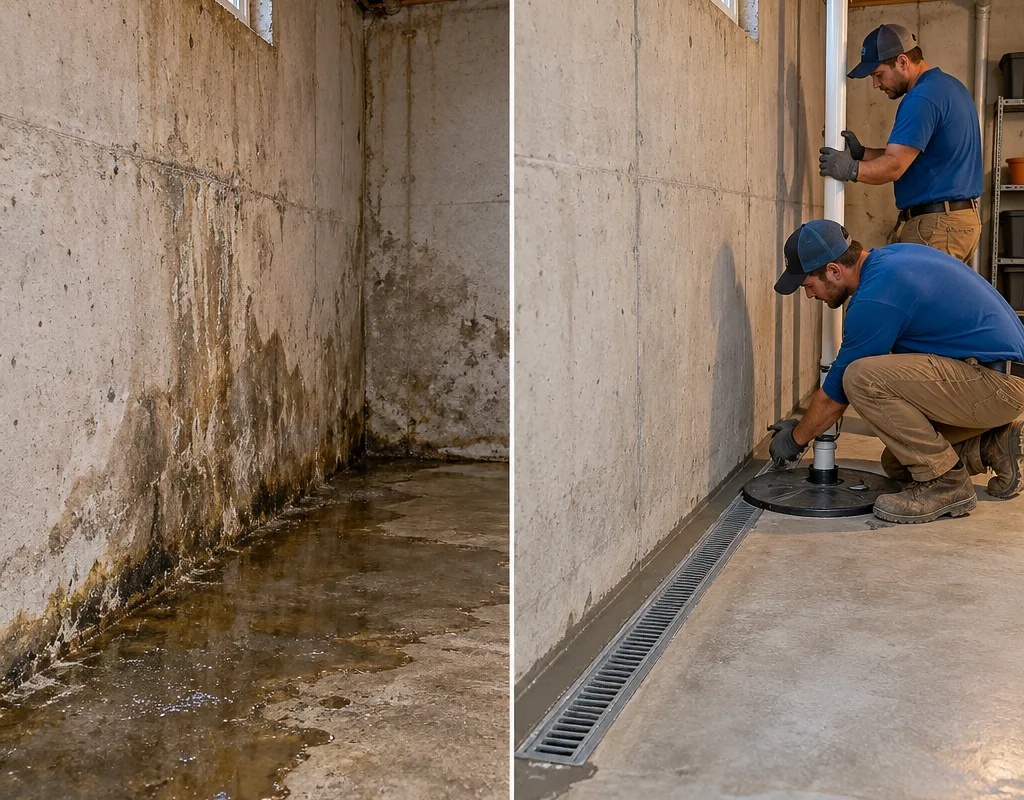
Water at the wall-to-floor joint
Seepage where the foundation wall meets the slab is one of the most common entry points. Interior perimeter drains are designed specifically to capture and redirect that water.
Serving Charlotte, North Carolina & surrounding areas
Basement Waterproofing · Charlotte, NC
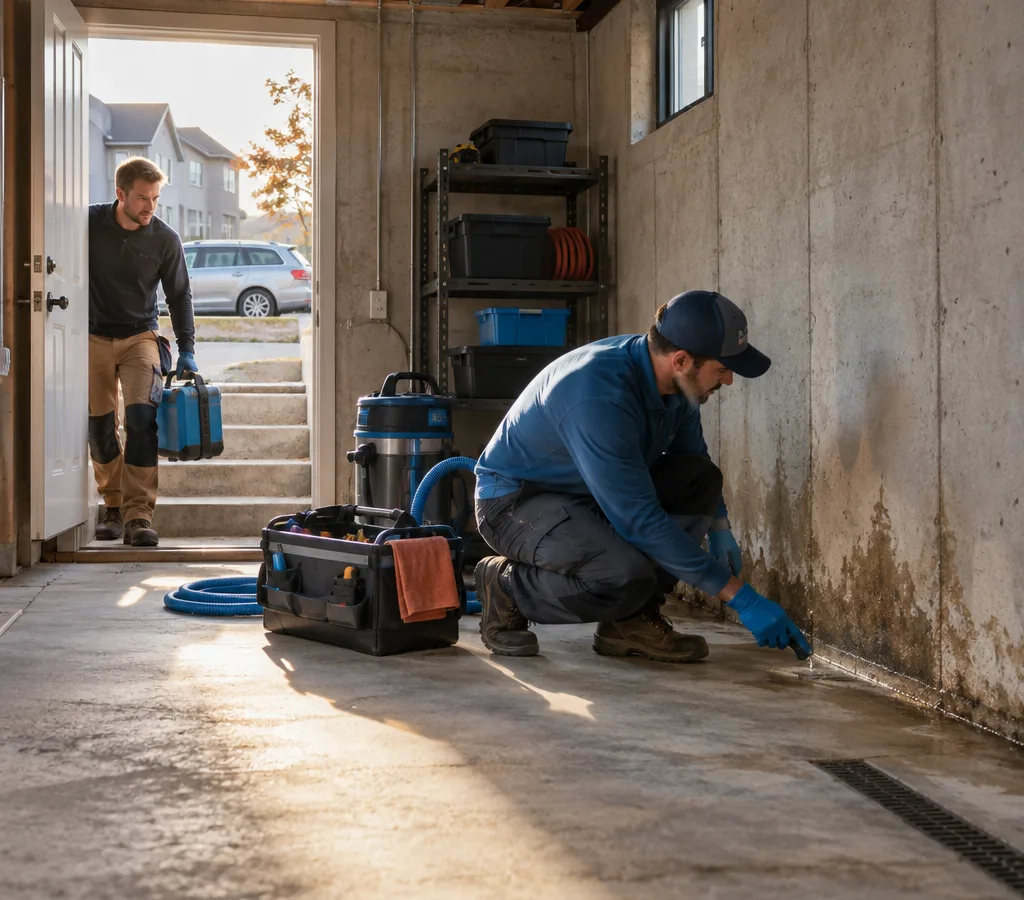
Stop leaks, lower humidity, and protect finished basements and storage areas with a clear plan built around how water is actually getting in.
Control Water at the Source
If you searched for basement waterproofing Charlotte homeowners rely on, you are probably seeing one of the common warning signs: puddling after a storm, damp block walls, peeling paint, musty odors, or a dehumidifier that never seems to catch up. In Charlotte, heavy rain events can push water toward foundations fast, and once water finds a path at the wall-to-floor joint or through a crack, it tends to keep using it.
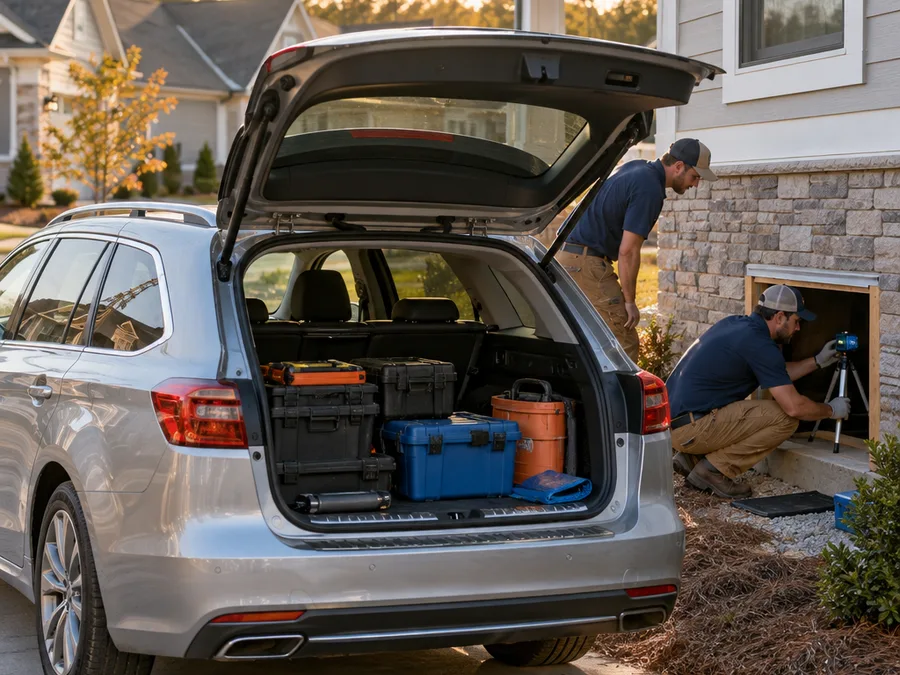
Foundation Repairs Charlotte NC handles basement waterproofing with an inspection-first approach. We locate the entry points, look at grading and downspout discharge around the home, and recommend the type of waterproofing that matches the problem. In many cases, the most reliable result comes from combining drainage control with a proven interior waterproofing system rather than relying on surface coatings alone.
Our work is part of Charlotte's local foundation service, and the goal is simple: a basement that stays dry in normal seasonal weather, with humidity that is easier to manage year-round.
A Complete Water-Control System
Basement waterproofing is not one single product. It is a set of measures that control where water goes, relieve pressure at the foundation, and keep moisture from collecting indoors.
A typical basement waterproofing scope in Charlotte may include:
During the inspection, we also look at simple exterior contributors that can overwhelm any interior system, such as short downspouts, clogged gutters, or negative grade—soil sloping toward the foundation. Those items are often the difference between a system that keeps up and one that gets overwhelmed.
Signs and Conditions
Seepage where the foundation wall meets the slab is one of the most common entry points. Interior perimeter drains are designed specifically to capture and redirect that water.
Even when you do not see standing water, damp masonry can keep humidity elevated. Moisture management and sealed drainage paths help the space stay more stable.
Finished basements are less forgiving. We focus on controlling water at the perimeter so it does not reach framing, flooring, and stored items.
Drylok-style coatings and quick patching can hide symptoms without addressing hydrostatic pressure. We recommend methods that manage water movement instead of fighting it at the surface.
A pump may be doing its job, or it may be undersized, short-cycling, or working without proper drainage feeding it. We evaluate the full system and discharge route.
If you are finishing a basement or preparing for a home inspection, a documented waterproofing plan reduces risk and makes future moisture issues less likely.
Inspection to Final Check
We check visible leak points, wall staining, efflorescence (white mineral deposits), sump performance, and the perimeter conditions outside, including downspout discharge and grading near the foundation.
Some basements need targeted crack repair. Others need drainage and a sump because water is building up around the foundation. We explain what we found and what each recommended component accomplishes.
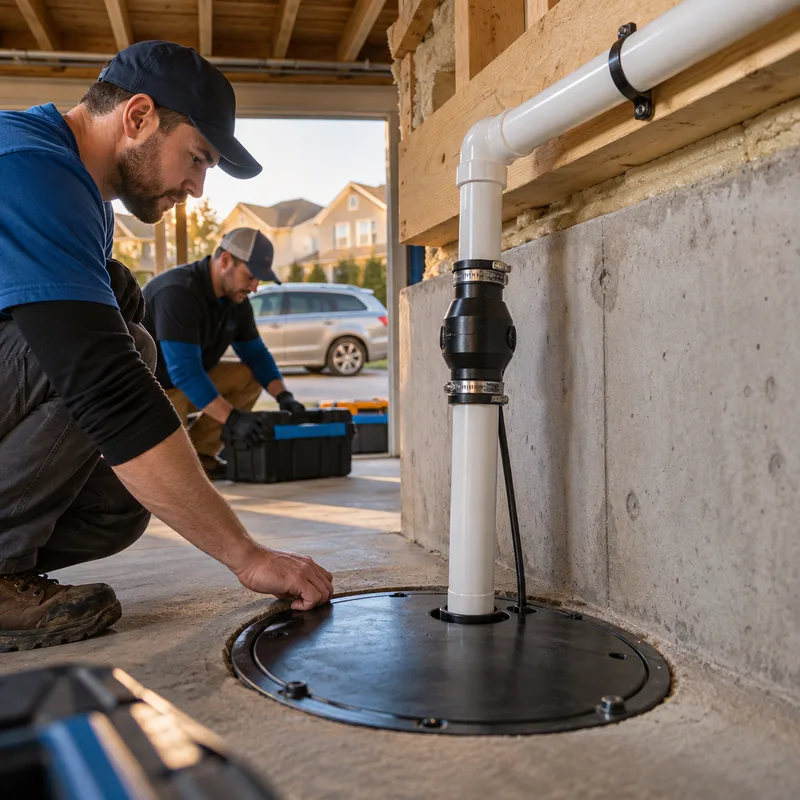
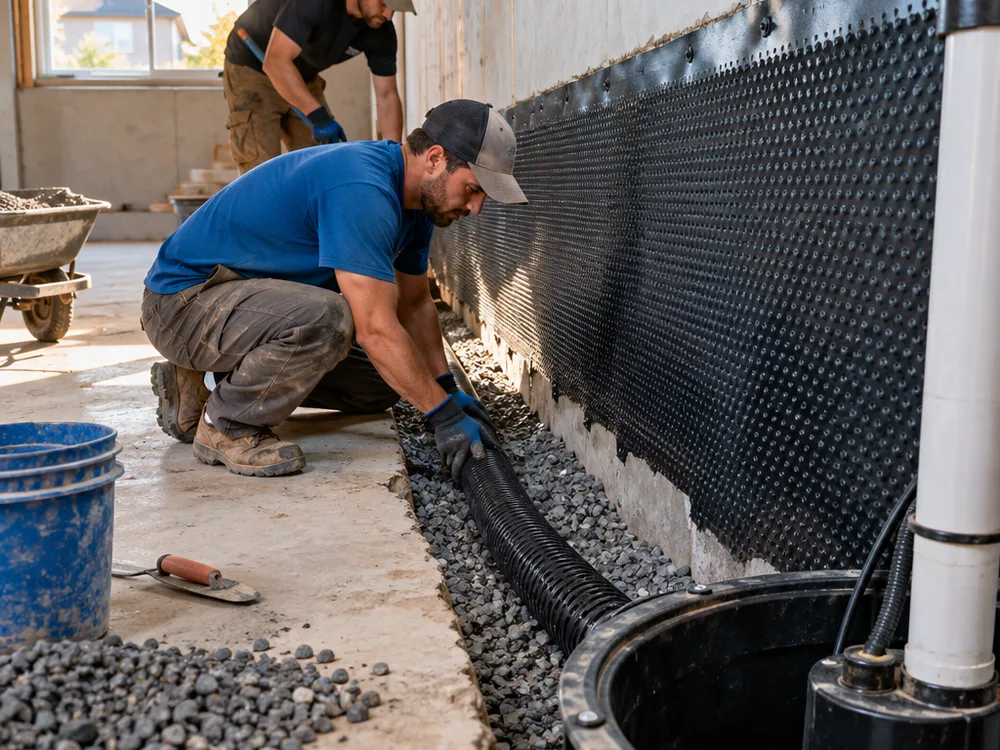
For interior drains, we isolate the work zone, cut the slab edge, install pipe and gravel, set or replace the sump basin as needed, and restore the concrete. For wall membranes, we route moisture down into the drainage path.
We verify pump operation, check the discharge route to ensure water is carried away from the home, and go over practical upkeep like keeping gutters flowing and checking the sump periodically.
Plan the Investment
Basement waterproofing in Charlotte typically ranges from about $2,500 to $12,000+, depending on whether you need a basic sump pump setup, a full interior perimeter drain, wall membrane, or multiple water entry points addressed. Smaller, targeted repairs—like a single crack injection—are usually on the lower end, while larger basements and finished spaces push costs higher.
Final pricing depends on basement size, access, how much concrete needs to be removed and replaced, pump and backup options, discharge routing, and how severe the water issue is. The exact cost is confirmed after an on-site inspection and a written scope.
Book Your Free Inspection“We kept getting water along one wall after heavy rain. The inspection explained exactly why it was happening, and the fix was based on drainage instead of just sealing the wall. The basement has stayed dry since.”
“Our sump pump was running nonstop and the humidity was still high. They replaced the pump, corrected the discharge, and added perimeter drainage where it was needed. The space feels normal again.”
Answers Before You Decide
Yes, interior systems are a proven approach in Charlotte because they manage water after it reaches the foundation and relieve pressure at the slab edge. A perimeter drain and sump pump are designed to capture seepage at the wall-to-floor joint and move it out, which is often more reliable than surface coatings when rainfall saturates the soil around a home.
You need a sump pump when groundwater or perimeter drainage needs a collection point and a reliable way to discharge water away from the foundation. If water shows up after storms, if seepage runs along the perimeter, or if the basement sits lower than the surrounding grade, a sump is often part of the correct fix. The inspection determines whether gravity drainage is possible or if a pump is required.
Leaks that show up during heavy rain usually come from rapid soil saturation, short or clogged downspouts, or grading that funnels water toward the foundation. When the soil gets saturated, pressure increases and water finds the easiest path inside, commonly at the wall-to-slab seam, through cracks, or around penetrations.
Sometimes, but it depends on where the water is entering and whether a full perimeter drain is needed. If the leak is localized—for example, a single crack—targeted repair may be possible with limited disruption. If water is entering along multiple walls, effective waterproofing often requires access to the slab edge, which can mean removing base trim and some finishes along the perimeter.
Many sump pump or localized repair jobs can be completed in a day, while a full interior perimeter drain commonly takes 2 to 3 days depending on basement size, concrete thickness, and access. You will get a realistic schedule after the inspection and scope are confirmed.
First, move stored items off the floor and away from wet walls, and run fans or a dehumidifier to reduce moisture. If the leak is near electrical outlets, keep the area clear and avoid using that wall. Then schedule an inspection so the entry point and the best long-term waterproofing approach can be identified before the next storm.
Start With an Inspection
Tell us what you are seeing and when it happens. We will inspect the basement, explain the cause in plain language, and provide a written scope for basement waterproofing in Charlotte that fits your home.